


- By Newton Thomas
- April 1, 2023
- Blog
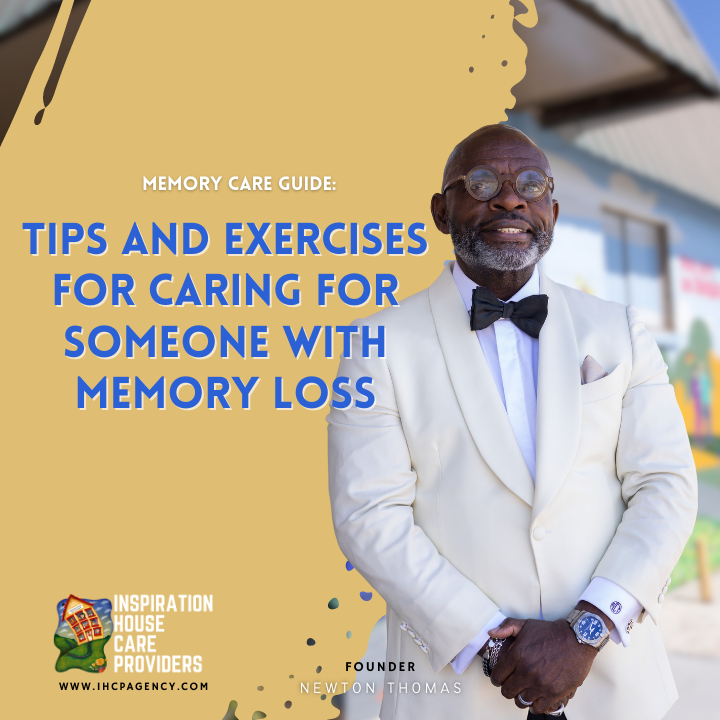
Memory loss can be a challenging condition that affects millions of people around the world. For those who are caring for someone with memory loss, the experience can be both rewarding and stressful. The following guide provides tips and exercises for caring for someone with memory loss.
Tips for Memory Care:
- Understand the condition: Educate yourself about memory loss, including the causes, symptoms, and treatments. This will help you provide appropriate care and support for your loved one.
- Establish a routine: Establishing a daily routine can be helpful for someone with memory loss. Try to maintain consistency in activities such as meals, bathing, and bedtime.
- Create a safe environment: Safety is essential when caring for someone with memory loss. Remove potential hazards such as sharp objects or clutter, and install safety devices such as grab bars or handrails as needed.
- Encourage physical activity: Physical activity can help improve memory and mood. Encourage your loved one to participate in activities such as walking, stretching, or yoga.
- Keep communication simple: Communication can be challenging for someone with memory loss. Keep conversations simple and direct, and avoid asking too many questions at once.
- Use memory aids: Memory aids such as calendars, to-do lists, and reminders can be helpful for someone with memory loss. Encourage your loved one to use these aids to stay organized.
- Monitor medication: Ensure that your loved one is taking medication as prescribed. Consider using a pill organizer to keep track of medication schedules.
- Seek support: Caring for someone with memory loss can be overwhelming at times. Seek support from family members, friends, or a professional caregiver if needed.
- Be patient and understanding: Caring for someone with memory loss requires patience and understanding. Be prepared for challenges and try to remain positive and supportive.
- Take care of yourself: It’s essential to take care of yourself when caring for someone with memory loss. Ensure that you are getting enough rest, eating well, and taking time to relax and recharge.
Memory Exercises:
- Repetition: Repeat important information several times throughout the day, such as a person’s name, phone number, or address.
- Association: Associate new information with something familiar or memorable, such as a person’s name with a particular color or object.
- Visualization: Create mental images to help remember information, such as visualizing a grocery list by associating each item with a picture in your mind.
- Chunking: Group information into smaller, more manageable chunks to make it easier to remember. For example, remember a phone number in groups of three or four digits.
- Mnemonic devices: Use mnemonic devices such as acronyms or rhymes to help remember information, such as “ROY G BIV” to remember the colors of the rainbow.
- Memory games: Play memory games such as card matching or crossword puzzles to exercise the brain and improve memory.
- Journals and diaries: Encourage the individual to keep a journal or diary to record important events, thoughts, and ideas.
- Physical exercise: Physical exercise has been shown to improve memory by increasing blood flow and oxygen to the brain.
- Social interaction: Encourage the individual to engage in social activities to help maintain cognitive function and memory.
- Meditation: Meditation can help reduce stress and improve focus, which can help improve memory.
When practicing memory exercises, it’s important to start with small and manageable tasks and gradually increase the difficulty as the individual becomes more comfortable. Additionally, it’s important to be patient and encouraging and to avoid putting pressure on the individual to remember information.